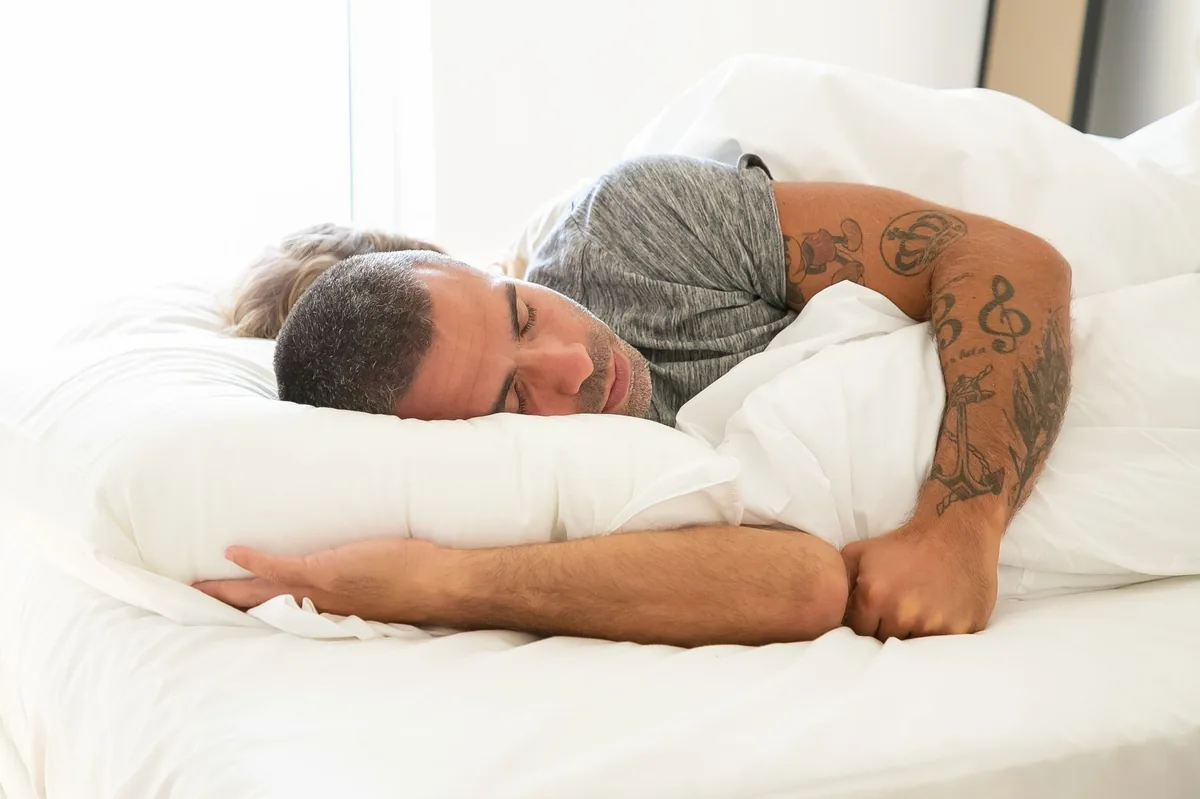
The harder you try to fall asleep, the more awake you feel. If you spend 30, 45, or 60 minutes staring at the ceiling — mind racing, checking the clock — you’re not alone, and it’s not your fault. Falling asleep quickly is a skill built on the right conditions and habits, not willpower. Here are 15 science-backed ways to fall asleep faster, starting tonight.
Often the real culprit behind slow, broken sleep is your stress hormone. If you fall asleep fine but wake at 3 AM, read cortisol and sleep too.
Why can’t you fall asleep?
Falling asleep requires two things to line up: enough sleep pressure (the natural drive that builds the longer you’re awake) and a calm nervous system (low stress, low cortisol, low arousal). Most sleep-onset problems come from a nervous system that’s still switched “on” — from screens, stress, caffeine, or an irregular schedule. Fix those, and sleep comes faster.
15 science-backed ways to fall asleep faster
1. Keep a consistent sleep schedule
Going to bed and waking at the same time every day — even weekends — trains your body clock so sleep arrives on cue. It’s the single most powerful habit for faster sleep.
2. Use the 10-minute rule (don’t force it)
If you’re still awake after about 20 minutes, get up and do something calm and boring in dim light until you feel sleepy, then return to bed. Lying there frustrated teaches your brain that bed = stress.
3. Cool down your bedroom
Your core temperature needs to drop to fall asleep. A cool room (around 18°C / 65°F) helps this happen. A warm bath or shower 1–2 hours before bed also works — the after-drop in temperature makes you sleepy.
4. Dim the lights 90 minutes before bed
Bright light suppresses melatonin, your sleep hormone. Dim overhead lights and switch to lamps in the evening to signal your brain that night is coming.
5. Get off screens (or dim them)
Phones and TVs emit stimulating light and, worse, stimulating content. Stop scrolling at least 30–60 minutes before bed. If you must use a device, enable night/warm mode. More on this in cortisol and sleep.
6. Try the 4-7-8 breath
Breathe in for 4 counts, hold for 7, exhale slowly for 8. The long exhale activates your “rest and digest” system and slows a racing mind. See more breathing exercises for stress.
7. Do a “brain dump” before bed
Write tomorrow’s tasks and worries on paper. Offloading them stops the mental spin that keeps you awake — and it’s especially helpful if you tend toward morning anxiety.
8. Set a caffeine cutoff
Caffeine has a long half-life. Stop by early afternoon (around 2 PM) so it’s cleared by bedtime. Learn how it interacts with stress in foods that lower cortisol.
9. Be careful with alcohol
A nightcap helps you nod off but fragments sleep later and can trigger a 3 AM wake-up. Keep it moderate and not close to bedtime.
10. Get morning daylight
It sounds backwards, but bright light in the morning sets your body clock so melatonin releases on time at night — helping you fall asleep faster later.
11. Don’t go to bed hungry or stuffed
A heavy meal or an empty, growling stomach both disrupt sleep onset. If needed, a small protein-and-fat snack (not sugar) can prevent an overnight dip.
12. Try progressive muscle relaxation
Tense and then release each muscle group from your toes to your head. It lowers physical tension and pulls attention away from anxious thoughts.
13. Make your bedroom dark and quiet
Blackout curtains, an eye mask, and earplugs or white noise remove the small disruptions that keep your brain half-alert.
14. Reserve your bed for sleep
Don’t work, scroll, or worry in bed. When your brain associates the bed only with sleep, you drift off faster.
15. Consider magnesium in the evening
Magnesium (especially the glycinate form) supports nervous-system relaxation, and many adults are mildly low. It’s a gentle, evidence-supported option — see how it fits in our supplements guide.
A simple wind-down routine
| Time before bed | Do this |
|---|---|
| 90 min | Dim lights, last screens, warm shower |
| 60 min | Cool the bedroom, 2-minute brain dump |
| 30 min | Read (paper) or gentle stretch, no phone |
| In bed | 4-7-8 breathing or progressive muscle relaxation |
Want a structured program?
If you’d rather follow a step-by-step system than piece tips together, some people find a guided program helps them stick with it. We took an honest look at one popular option — built around the nighttime cortisol spike — in our Sleep Hacking review, including where it’s worth it and where it’s just marketing.
When to see a doctor
If you regularly take more than 30 minutes to fall asleep for several weeks, or you have loud snoring, gasping, restless legs, or daytime exhaustion, talk to a doctor. Insomnia, sleep apnea, and other sleep disorders are common and treatable — and no amount of sleep hygiene replaces proper diagnosis.
Frequently asked questions
How can I fall asleep in 5 minutes?
You can’t guarantee 5 minutes, but you can speed things up: a cool, dark room, the 4-7-8 breathing technique, no screens beforehand, and a consistent schedule are the fastest-acting levers. Relaxation techniques like progressive muscle relaxation also help you drift off quicker.
Why do I take so long to fall asleep?
Usually because your nervous system is still aroused — from screens, stress, caffeine, or an irregular schedule — or because you don’t have enough sleep pressure yet. Addressing light, stress, caffeine timing, and consistency solves most cases.
What is the 10-minute sleep rule?
If you’re still awake after about 20 minutes (some say 10), get out of bed and do something calm in dim light until you feel sleepy, then return. It prevents your brain from associating bed with frustration.
Does magnesium help you fall asleep faster?
Magnesium supports nervous-system relaxation and sleep quality, and many adults are mildly deficient. The glycinate form is gentle and well absorbed for evening use, though it’s a supporting tool, not a sedative.
Medical disclaimer: This article is for educational purposes only and is not medical advice. It has not been evaluated by the FDA and is not intended to diagnose, treat, cure, or prevent any disease. Consult a qualified healthcare provider about persistent sleep problems.